At Emergency Food Network (EFN), we believe growing older should come with stability, comfort, and dignity—not the stress of wondering where the next meal will come from.
Seniors aren’t the first group most people think of when they consider food insecurity. The reality is, food insecurity is a concern for many older adults, and last year 1 in 5 visits made to our partner food pantries was made by an older adult.
Delivering Nutrition and Support
In addition to our network of 75+ food pantries, meal sites, and shelters, EFN serves seniors directly through our Home Delivery Program. Delivery programs are particularly impactful for seniors who may deal with mobility challenges and transportation barriers that make it hard to access other services.
“A lot of the recipients of EFN’s Home Delivery Program don’t get much contact other than people who come to the door, like us or the mail carrier,” says volunteer driver Stuart Monroe. “They need that connection. I’ve got the time to stop, listen to a story, and spend a few minutes with people.”
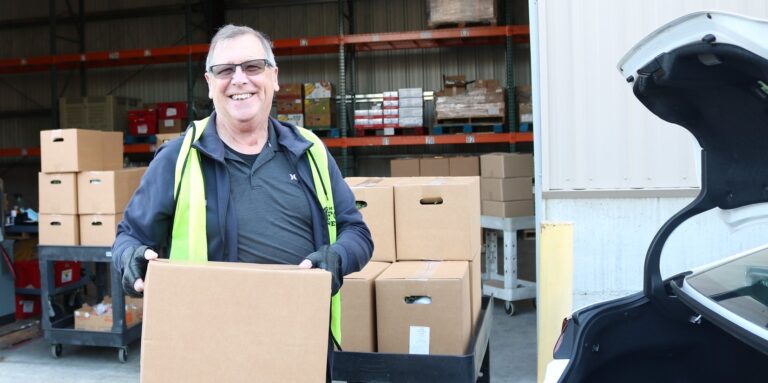
EFN intentionally purchases food items for these boxes with seniors’ health needs in mind. Deliveries contain a variety of fresh produce, grains, and proteins. When purchasing canned goods, we choose items that are lower in sodium and sugar. For many older adults managing chronic health conditions, access to healthier food options can make a meaningful difference in their overall health and quality of life.
Another way EFN serves seniors is through the Commodity Supplemental Food Program (CSFP). CSFP is a federal program that provides monthly deliveries of shelf-stable food to low-income seniors. As a regional contractor for CSFP, EFN delivers food to more than 100 seniors each month.
Serving With Compassion
CSFP is about more than a box of food. It is about connection, compassion, and helping seniors feel supported.
EFN’s Programs Administrative Coordinator, Janet Garbino, goes far beyond simply enrolling participants and distributing food. She takes the time to understand each person’s unique situation and works to remove barriers that may prevent them from accessing the program.
The USDA requires that people enroll in CSFP by completing paperwork in-person. Many participants will come to EFN to sign up for the program, but this policy is a barrier for many people. Janet removes these barriers by bringing application forms directly to their homes and helping them through the process. If a participant is unable to carry an entire food box, she encourages them to carry items in one can at a time so they can still benefit from the program. She listens to concerns, answers questions, and when appropriate, connects seniors with additional community resources that may help meet other needs.
“Speaking directly with participants has been incredibly valuable,” says Janet. “Many are deeply grateful for the support this program provides. Even when there were food items they couldn’t use, they often shared them with others and ‘paid it forward,’ reflecting a remarkable sense of community.”
Janet’s work reflects what we see throughout EFN: food assistance is not just about food. It is about dignity, independence, and making sure people know they are not alone.
A Shrinking Safety Net
According to the AARP Public Policy Institute, 12.7 million Americans ages 50 and older faced food insecurity in 2024. Rising costs for housing, healthcare, and medications continue to force difficult choices for many older adults living on fixed incomes.
For seniors, food insecurity is often hidden. It may look like skipping meals, eating less nutritious foods, delaying medical care, or choosing between groceries and prescription medications.
When Fixed Incomes Aren’t Enough
- 14.5% of seniors live below the poverty line.
- More than half of adults age 65 and older who live alone lack enough income to consistently afford basic necessities.
- Food insecurity among households that include adults age 60 and older has increased significantly over the past two decades.
The Health Impact Of Hunger
Food insecurity has real health consequences. It can worsen chronic conditions, weaken immune response, and increase hospitalizations. For older adults, having consistent access to nutritious food is directly connected to maintaining independence and quality of life.
One recipient of EFN’s Home Delivery Program shared:
“I am so grateful for the help. It’s been a struggle. I am on Disability and have to work two days a week to make car payments, utilities and essentials. If it wasn’t for this food program through EFN and VMFH I may not be here, and I still wonder if I will survive my golden years and have a place to live or food and medication.”
How to Help
No senior should have to choose between food and medicine—or between groceries and rent.
There are many ways our community can help:
- Advocate with your voice and your vote to protect programs that help older adults access nutritious food.
- Share information about EFN’s programs with family, friends, and neighbors. Many seniors and their loved ones do not know these resources exist.
- Encourage older adults who may need support to apply. There is no shame in asking for help—these programs exist because everyone deserves access to nutritious food.
- EFN still has openings available in the CSFP program for eligible seniors. Reach out to Janet at JanetG@efoodnet.org for more information. Help us spread the word so those who need support can connect with this resource.
- Donate or volunteer to help keep food moving to seniors across Pierce County.
Together, we can make sure older adults in our community have access to nutritious food, meaningful connection, and the dignity they deserve.
Sources:
USDA Economic Research Service – Food insecurity among older adults
USDA Food and Nutrition Service – Commodity Supplemental Food Program (CSFP)
Meals on Wheels America, America’s Aging Population Fact Sheet (analysis of U.S. Census Bureau CPS ASEC data).
Coyle et al. (2026), Living Between the Lines: Economic Insecurity and Older Americans: Insecurity in the States, 2025, UMass Boston.